Checking cargo condition before container loading means confirming shipment identity, package condition, container suitability, loading controls, and handoff records while corrections are still possible. Define the inspection scope, weight responsibility, and exception authority in advance, then record what was actually observed and connect the final load to the packing list and purchase order.
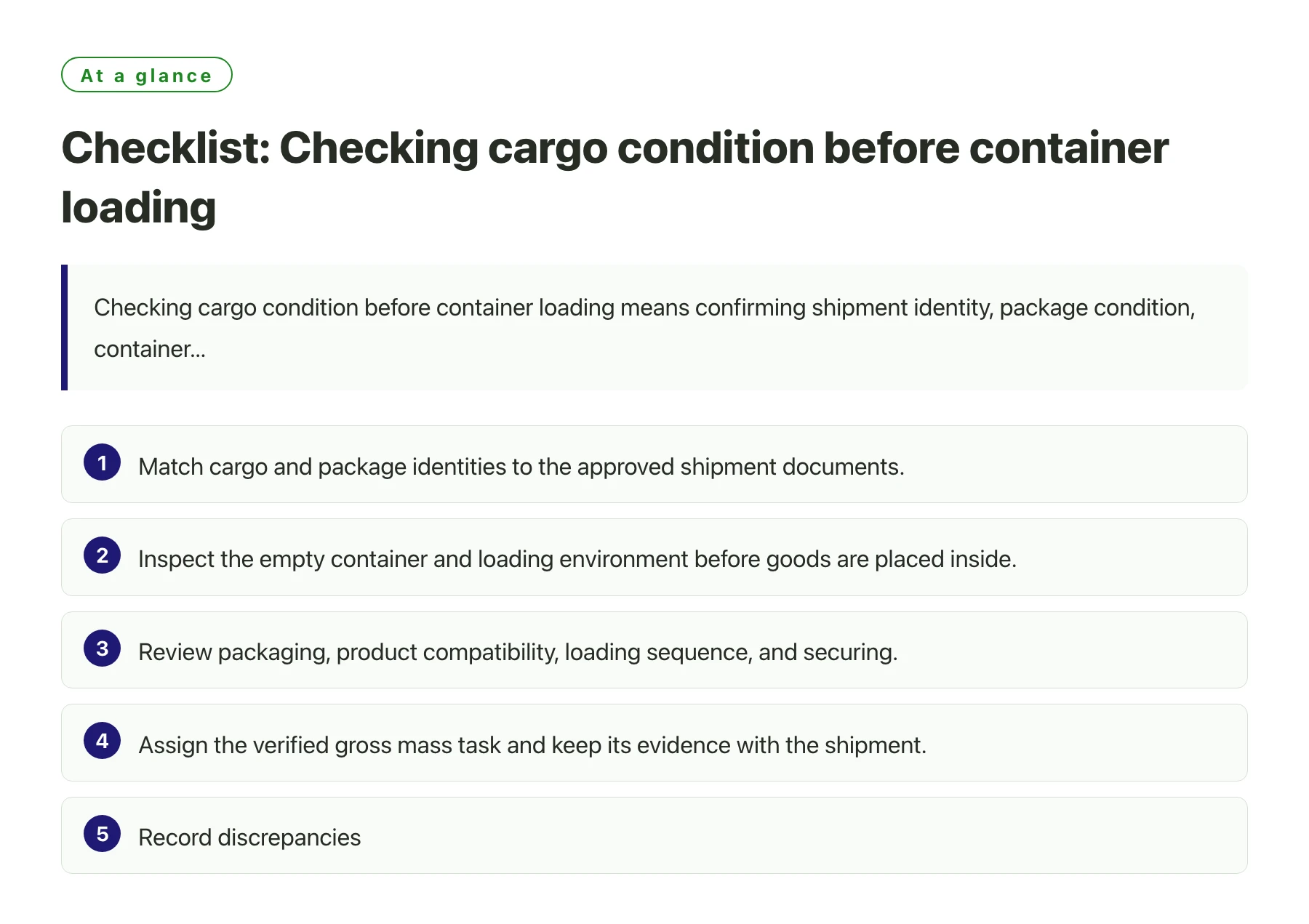
Key takeawaysMatch cargo and package identities to the approved shipment documents. · Inspect the empty container and loading environment before goods are placed inside. · Review packaging, product compatibility, loading sequence, and securing. · Assign the verified gross mass task and keep its evidence with the shipment. · Record discrepancies, corrective action, final count, seal, and handoff.
A pre-loading check is a point-in-time review that can catch visible problems and document how the cargo was packed. It should follow a written scope and should not claim to verify conditions that could not be observed.
Verify shipment identity and readiness
Before the container arrives, compare the approved purchase orders, packing list, shipment instructions, and expected package count. Identify product codes, lots, carton marks, special handling instructions, destination, and planned loading sequence. Resolve differences while goods are still accessible rather than relying on a driver or loading team to reconcile commercial records at the dock.
Confirm that the goods presented are the shipment authorized for release. Record item and lot identifiers, pallet counts, and quantities available. If several buyers or orders are staged together, mark their boundaries and keep each packing list separate. A correct total across mixed orders does not prove that each consignee receives the right product.
Agree what “cargo condition check” includes. It may involve package condition, labels, count, visible product condition, or inspection of selected cartons. State whether cartons may be opened, what sample basis applies, and who can accept or hold cargo. Report the actual work performed, not a broader claim of complete inspection.
Inspect the container and loading environment
Before loading, record the container number and inspect the interior for visible damage, holes, water ingress, odor, residue, pests, floor issues, protruding objects, or conditions that could harm the cargo. Check doors and locking hardware and confirm that the container appears suitable for the planned goods. If an issue may compromise safety or product condition, stop and escalate under the agreed authority.
Check that the loading area, equipment, and handling method fit the package size and product fragility. Confirm forklift capacity and pallet condition where relevant, and identify weather or moisture exposure risks during staging. Keep products protected from rain, dust, and uncontrolled contact while the container is prepared.
Take dated photographs of the empty unit, visible condition, container number, cargo staging, and any exception. Use consistent wide and close views so the record connects a defect to the container or package. Follow site rules for confidential areas and employee images.
Review packaging and cargo compatibility
Inspect cartons, pallets, straps, wrap, edge protection, labels, and moisture barriers against the approved packing instructions. Look for crushed corners, punctures, wet cartons, loose bands, broken seals, or exposed product. Record the affected package numbers and isolate damage that could worsen during handling or transit.
Consider how different cargo types will be placed together. Heavy and fragile packages, liquids, odor-sensitive goods, food-contact materials, or temperature-sensitive products may need separation or a specific loading sequence. Follow the buyer’s product instructions and qualified transport guidance rather than improvising a mixed load.
The IMO/ILO/UNECE CTU Code provides a non-mandatory global code of practice with guidance on packing and securing cargo transport units across sea and land transport.[1] Use it as a reference with the transport plan and applicable requirements; it does not replace a cargo-specific loading instruction or the carrier’s rules.
Check loading, weight, and securing evidence
Observe whether the loading sequence matches the plan and whether cargo is distributed and secured to reduce movement. Check the use of blocking, bracing, dunnage, lashing, and void fill against the load characteristics and approved instructions. Avoid overstacking, concentrated loading, or arrangements that place pressure on packages not designed to bear it.
For sea containers subject to SOLAS, the shipper is responsible for providing the verified gross mass in time for vessel stowage planning; the verified gross mass is a condition for loading a packed container onto a covered ship. Assign who obtains and transmits the weight and which method and evidence are used. Do not estimate from a shipping quote or mark a value verified without an approved basis.
Record package and pallet counts as loading proceeds, note any substitutions or removals, and compare final totals with the packing list. If the load changes, request a corrected list and verify that gross weight, marks, and consignee references remain accurate before the container is sealed.
Handle exceptions before the doors close
When a package is damaged, missing, mislabeled, wet, or inconsistent with the shipment list, mark the exact identity and condition. Notify the buyer’s named contact and keep the package separate from conforming goods. Decide whether to replace, repair, re-pack, re-inspect, or hold the affected cargo under the contract and quality process.
If the container itself is unsuitable, stop loading and document the reason. Arrange a replacement or corrective action with the carrier and supplier. Record whether any cargo was already loaded and whether it needs additional inspection after unloading or transfer.
Each exception should have an owner, decision, evidence, and closure status. If an authorized person accepts a deviation, identify the affected packages and any restrictions. A verbal instruction should be captured in a controlled report before shipment proceeds.
Close the loading record and hand off the shipment
After loading, record container number, final package count, loading time, seal number, gross-mass document reference, and any deviations. Photograph the final arrangement, securing, closed doors, and seal where appropriate. Preserve the evidence with the packing-list revision and purchase-order references.
Share the final report with purchasing, logistics, quality, and receiving contacts. Identify checks that were not completed, documents still pending, and actions due after dispatch. Make sure the receiving team knows how to identify lots, damage indicators, or special handling requirements on arrival.
For container loading supervision in China, buyers may consider JS Sourcing cargo loading supervision for coordination. Specify whether the work covers container inspection, package checks, count reconciliation, weight documents, loading observation, and sealing; keep final release decisions with the named shipper or buyer authority.
Sources
Frequently asked questions
What should be inspected before a container is loaded?
Check shipment identity, package and pallet condition, container number and visible interior condition, handling readiness, loading instructions, and any cargo-specific requirements in the agreed scope.
Who is responsible for providing verified gross mass?
For covered sea shipments, SOLAS places responsibility on the shipper to provide verified gross mass in time for stowage planning. Assign the method, owner, document, and transmission step for the shipment.
Does a loading supervisor verify every product inside each carton?
Not unless the assignment explicitly requires opening and checking all cartons. The report should state whether it checked labels, sampled packages, or performed a full count and inspection.
What should happen when damaged cargo is found?
Identify and isolate affected packages, document the condition, notify the authorized contact, and agree on replacement, re-packing, inspection, hold, or an approved deviation before loading proceeds.